Transurethral resection of the prostate and transurethral resection of a bladder tumor are both performed through the urethra, but they are different operations. The first removes an obstruction to urinary flow; the second removes the visible lesion and provides tissue to establish the diagnosis and stage.
TURP
Bladder
Histology
The same access route does not mean the same aim: the prostate and bladder need different follow-up plansGeneral medical information
This material was prepared by a doctor using Russian clinical guidelines and EAU guidance. It does not establish a diagnosis, prescribe treatment or replace an in-person consultation. The choice of method depends on investigations, coexisting conditions and individual risks. A surgical outcome cannot be guaranteed in advance.
Access
through the urethra
TURP
restoring urinary flow
Transurethral resection of a tumour
tissue removal and staging
01 / Two scenarios
Do not confuse different objectives
TURP
Considered for severe symptoms and confirmed obstruction when medication has not helped or BPH complications have developed.
recurrent or persistent urinary retention
bladder stones or recurrent infections
bleeding caused by BPH that does not respond to treatment
deteriorating kidney function due to obstruction
Transurethral resection of a bladder tumor
Performed for a lesion found on cystoscopy or imaging to remove the visible tumour and obtain tissue for histopathology.
a visible lesion or suspicion of one
visible blood in urine and the need to establish the cause
determining the type, grade and depth of invasion
initial treatment for non-muscle-invasive disease
02 / Decision
How the extent of the procedure is chosen
For BPH, assessment includes symptoms and IPSS, prostate volume, post-void residual urine, uroflowmetry, bladder and kidney function, PSA, the median lobe, coexisting conditions and the importance of preserving ejaculation.
For a tumour, cystoscopy, urine cytology, imaging, the number, size and location of lesions, and whether the disease is primary or recurrent are considered. Pathology determines whether repeat resection, intravesical therapy, surveillance or another treatment is needed.
03 / Surgery
How transurethral procedures are performed
The resectoscope is inserted through the urethra. In TURP, tissue obstructing urinary outflow is removed step by step. In TURBT, visible lesions are removed and tissue is obtained, including the muscle layer when needed for accurate staging.
A catheter is usually inserted after the procedure; bladder irrigation is sometimes required. The duration of catheterisation depends on the type of operation and recovery.
Clinical practice
Transurethral surgery in clinical practice
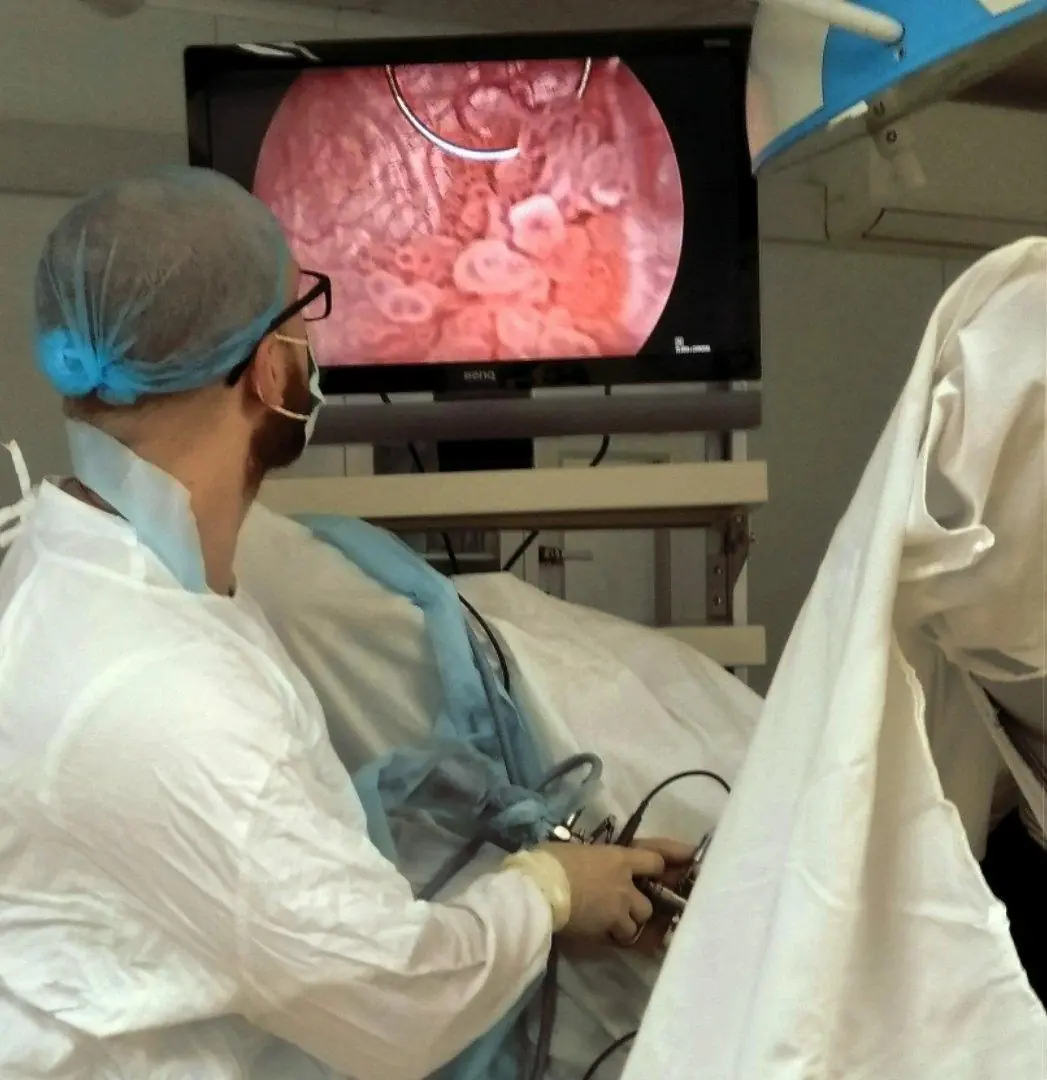
The image shows the endoscopic stage of transurethral resection of a bladder lesion. The final diagnosis and further management are determined only after pathological examination.
Transurethral resection of the bladder
Transurethral access allows work through the urethra and tissue collection for histopathology
04 / Preparation
What to bring to the consultation
For BPH
Bladder diary, IPSS, ultrasound with prostate volume and residual urine, uroflowmetry, PSA trend and creatinine.
For a tumor
Cystoscopy, CT or MRI in DICOM, cytology, all previous histology reports and discharge summaries.
05 / After surgery
Follow-up after discharge
A small amount of blood and increased urgency may occur. Catheter duration, restrictions and the follow-up appointment date depend on the type of surgery.
After transurethral resection of a tumour, obtaining the histology result and discussing the next steps are critically important. No visible tumour after surgery does not mean treatment and follow-up are complete.
06 / Risks
The risks differ
After TURP
Bleeding, infection, urinary retention, scar-related narrowing of the urethra or bladder neck, retrograde ejaculation and temporary incontinence. Persistent incontinence or erectile dysfunction occur less often.
After TURBT
Bleeding and clot retention, infection, bladder perforation, incomplete removal or understaging, need for repeat surgery and risk of recurrence.
07 / Urgent care
When to seek help without waiting
Inability to urinate, bright red blood with clots, increasing pain above the pubic bone, high fever or chills require urgent medical assessment.
Patient questions
Frequently asked questions
TURP and transurethral tumour resection are the same operation
No. The access route is the same, but the goals, amount of tissue removed, risks and subsequent follow-up differ.
Does benign prostatic hyperplasia always require TURP?
No. Observation, medication, enucleation and other methods are options. The choice depends on symptoms, prostate volume, complications, anatomy and the patient's expectations.
What happens after the tumor histology result
The plan depends on tumour type, grade, whether the specimen contains muscle and the depth of invasion. Repeat TURBT, intravesical therapy or another treatment may be needed.
Verifiable evidence
Sources
This page explains general guidance in plain language. Decisions for an individual patient are made after an in-person assessment and cannot be reduced to a single guideline recommendation.
Book an appointment with urologist Artem Ershov in Krasnoyarsk
Bring DICOM imaging, reports, test results and a medication list. This helps discuss management based on data rather than memory. In-person appointments: RZD Medicine Clinical Hospital, 47 Lomonosova Street, Krasnoyarsk.